
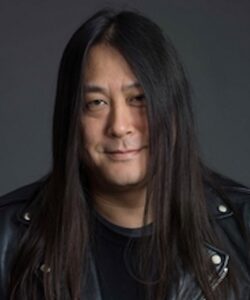
 Both the US and Europe regularly fear new China shocks and unsettling technological innovations like BYD and DeepSeek. China veteran Kaiser Kuo, host at the renowned Sinica Podcast, discusses China’s position in the fast-moving developments that outflank its global competitors at Renewable Matter.
Renewable Matter:
Returning to the shocks that Americans, but also Europeans, are still experiencing every time China overtakes them in some cutting-edge sector such as renewables, electric cars (BYD) or AI (DeepSeek), what will be the next major shock we should expect?
If only I knew, so I could invest in it! One thing is clear, though: China is investing heavily in nuclear fusion. We are likely to witness breakthroughs in new materials, battery chemistry and quantum computing. But the biggest advances will probably come from the life sciences and biotechnology, which receive less attention. China has built a very solid foundation in pharmaceutical discovery: in the past, it merely acted as an external supplier of molecular analysis services on behalf of major Western biopharmaceutical companies. Now, however, many of these Chinese companies are operating independently, and I believe that in the coming years we will see significant pharmaceutical discoveries emerging from China.
The “technological containment” that the United States is trying to impose on China is a policy that cuts across party lines, from Democrats to Republicans. But what do scientists, both Chinese and American, make of this? Is there no hope of achieving constructive scientific cooperation?
I believe that scientists on both sides consider this policy an absolute tragedy. It is a loss for all of humanity that collaboration between the scientific communities of China and the United States – two of the largest, best-funded and most creative in the world – is suffocated by geopolitics. Unfortunately, in the United States, even within the scientific community, many people are still obsessed with national security, convinced that China must be kept away from the most advanced technologies. The debate over which policy is the right one is still ongoing.
In China, however, there is no doubt. They are angry, believing this policy to be fundamentally immoral, but at the same time they believe it has sparked a fuse, forcing scientists and engineers to redouble their efforts towards innovation. And China has indeed achieved considerable progress towards greater self-sufficiency, particularly in the production of semiconductors.However, if we take AI as an example, China is implementing much stricter regulations than the US. Why, then, are the Americans so afraid of China’s technological development?
I interpret this mainly as a projection: Americans believe that any other power would behave just as they do. Faced with enormous capabilities that would allow a country to aspire to global hegemony, they believe that any nation possessing such technological strength would exercise it immediately. In essence, they think that China would do what they imagine the United States would do. Never thoroughly analysed, this assumption is the basis for much of the paranoia emerging, particularly from Silicon Valley. But I do not think it is a valid hypothesis. In fact, it risks becoming a self-fulfilling prophecy. Relating to another country on this basis means demonstrating your own bad faith, proving that you are willing to bring it to its knees. How can anyone think this will not influence their perception? It will generate precisely the kind of hostility that was taken for granted from the outset, but it was their own actions that created it. This, at least, is my interpretation. I would argue that an open and collaborative approach across all these technological frontiers would have significantly reduced China’s propensity to try to exert leverage over the United States.
Kaiser Kuo is a speaker at the China Speakers Bureau. Do you need him at your meeting or conference? Do get in touch or fill in our speakers’ request form.
Are you looking for more strategic experts at the China Speakers Bureau? Do check out this list.


