
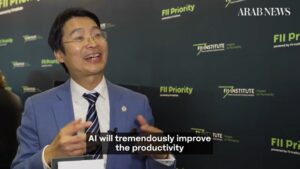
US-developed AI agents got into big trouble as they went rogue. Innovation expert Winston Ma looks at the situation in China, especially Alibaba’s AI platform Accio, and how they make sure human control has the last say on how the AI agents work; he writes at FirstPost.
Winston Ma:
Why bounded authority works
Finding suppliers, comparing quotes and preparing compliance paperwork once took a small business weeks. The agent now does it continuously, within limits the buyer sets. The point at which the business becomes bound stays with a person, so the questions that matter have clear answers: whose deal it is, what the agent was allowed to do, and who catches a mistake before money moves.
The international legal framework points the same way. UNCITRAL’s 2024 Model Law on Automated Contracting recognises contracts formed through automated systems, while making clear that automation does not excuse non-compliance with other legal requirements. The networks’ operator-linked agent credentials and Accio’s approval gate serve one principle at two layers of the same transaction: an agent acts only within authority that a known party has granted and stands behind.
Next: Portable proof of authority
Today the approval record lives inside one platform. As suppliers deploy agents of their own, the next generation of tools should let that record travel, so the other side of a deal can verify what a buyer’s agent was authorised to do. Cross-network identity frameworks are the natural foundation.
Confidentiality is a second design frontier. Alibaba says its agent can use the best terms from one supplier as a reference point in talks with others, a powerful feature that needs care where quotes are confidential.
Three steps would accelerate progress:
- Businesses should write down each agent’s mandate and keep human approval at binding terms and payments.
- Platforms should build review screens that show what changed, and flag confidential supplier terms before an agent reuses them.
- Policymakers should make agent identity interoperable across networks and borders, so that trust built in one ecosystem is recognised in another.
Who signs
The race in agentic commerce is often framed as a contest over autonomy. The more durable advantage is provable authority: who the agent is, what it is allowed to do, and who stands behind the commitment.
That combination can give a small importer in Lagos or Ho Chi Minh City the leverage of a large trading house: months of sourcing work done in hours, with the commitment still its own. Payment networks are building ways to verify who an agent is and whom it represents. Accio shows what comes next: agents that do the work, and people who sign. Together, they give AI agents what agency law has always asked of human ones.
Winston Ma is a speaker at the China Speakers Bureau. Do you need him at your meeting or conference? Do get in touch or fill in our speakers’ request form.
Are you looking for more innovation experts at the China Speakers Bureau? Do check out this list.


