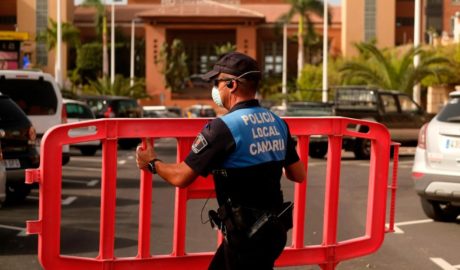
The China government is trying to push positive news in the way it handles the coronavirus crisis, but the economic fallout is only shaping up as the panic moves to other parts of the world. Airlines, shipping lines and other logistics and hospitality providers are maintaining the reduction on services, as demand is not yet picking up. Some logistic providers contemplate resuming services only in June, although they do not wish to confirm that less-favorable scenario.

Europe has become the latest victim of the coronavirus panic, and the number of patients rises, while numbers in the Americas are still low, but expected to go up too.Read More →

The ongoing coronavirus crisis has triggered off much racist behavior outside China and the qualification “Yellow Peril” raised its ugly head. Journalist Zhang Lijia, author of Lotus, a novel, on prostitution in China, dives into the history of Western racism towards China and the Chinese for the South China Morning Post.Read More →

After a first symbolic truce, the world should brace for the next phase in the trade war between China and the US, warns leading economist Arthur Kroeber, according to Barron’s. China has stalled its economic reforms and mechanisms to contain the US power fail, and the technology war is likely to resume, he stresses.Read More →

One of the major global initiatives by China was the massive Belt and Road Initiative, reviving the old silk roads. In May 2017 a major international conference showed what our experts were already expecting: now all roads lead to China. Even countries who suffered from difficult relations with China, including both Koreas, appeared in Beijing.Larger than the former Marshall Plan after the Second World War, OBOR is going to redefine global trade.Read More →

Less than a decade ago, the relations between China and the US dominated globally, not only for the economy but also for human rights. When the flight of Liu Xia, the widow of Nobel prize winner Liu Xiaobo, to Berlin last week, shows one thing, it is that Germany is taking over that role, says Pulitzer price winner Ian Johnson, author of The Souls of China: The Return of Religion After Mao, who gave a eulogy on Liu Xiaobo in Berlin, last Friday, at DW.Read More →

Eyes were on Sofia, Bulgaria, last week, as China’s prime minister Li Keqiang tries to improve relations with Eastern Europe. Economist Sara Hsu puts Li’s efforts into perspective as both trade and investments between China and Eastern Europe have been stagnant, compared to other countries in the One-Belt, One-Road initiative, she tells at CGTN. Also: the contagious relations with the EU.Read More →

Most observers of the recent trade actions by the US have been left behind flabbergasted, says leading economist Arthur Kroeber, author of China’s Economy: What Everyone Needs to Know® to CNN. While the rhetoric is firmly anti-Chinese, most damage is done to other countries than China. Although that could change, he adds.Read More →

Who killed more, Hitler or Stalin, is a question often asked. Journalist Ian Johnson, author of The Souls of China: The Return of Religion After Mao, argues – 60 years after the Great Leap Forward started – that Mao Zedong is often wrongly excluded from this debate. But he opts for a nuanced approach in The New York Review of Books, although in numbers Mao beats both Stalin and Hitler.Read More →

Journalist Ian Johnson will be in Berlin from half June to half September, and is available to share his insights on civil society, culture and religion. He is a Beijing-based writer for the New York Review of Books, and his stories also appear in the New York Times and ChinaFile.Read More →